Showing posts with label Discussion. Show all posts

Saturday, 27 June 2015

Science week

This week we set aside our usual learning plans, literacy and numeracy to engage the children in a week of hands-on science intensives. Our objectives were to learn about chemical change. So I undertook the teaching of bread making, something which I've personally been doing for years, but never really bothered to understand the chemical principals of. What resulted was in depth learning on my part, which I thoroughly enjoyed passing onto the children in years 4 - 8. 
We began the day by probing some of our prior knowledge about liquids, solids and gases and how things are formed by using this image from Cartoon Concepts: in science education about liquids. 

In particular I wanted the children to gather the understanding that whipped cream changes it's volume and shape by the whipping process where gas is added to the liquid. 
Using this diagram also enabled me to cover any misconceptions that they children had, and uncover their prior knowledge all while building their vocabulary and confidence in scientific discovery. 
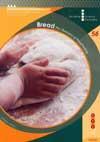
Following this intro we went about making bread using Building science concepts book 56: Bread: The chemistry of bread making as a guide for my lesson planning. Refer to my gbsparker class blog post on our bread making discovery.  

I wanted the children to explore raising agents in several ways and understand that the raising occurs by a chemical reaction between the ingredients in which carbon dioxide is developed. We used baking soda, and yeast to prove this theory in several different ways throughout each morning. More so, I needed them to understand the nature of yeast being a living organism. I found a great narrative in Yet more everyday science mysteries. Stories for inquiry-based science teaching*, which supported children in exploring this concept and determine that yeast reacts differently from baking soda; requiring time and warmth to create the chemical reaction required to develop the carbon dioxide.

As a teacher the process of planning and teaching this unit reinforced the 'teacher as learner' immensely for me. Even though I thought I knew a lot about bread making, I too learned so much during this process. I enjoyed teaching it and my learners enjoyed being a part of the discovery process. 


This blogpost relates to RTC: 
4.iii) initiate learning opportunities to advance personal professional knowledge and skills. 
6.ii) Through planning and teaching, demonstrate knowledge and understanding of relevant content, disciplines and curriculum documents. 
8.i) enable ākonga to make connections between their prior experiences and  learning and their current learning activities. 
9.ii) Select teaching approaches, resources, technologies and learning and assessment activities that are inclusive and effective for diverse ākonga. 


*Konicek-Moran, R. (2011) Yet more everyday science mysteries. Stories for inquiry-based science teaching. NSTApress p. 93-97

Wednesday, 19 March 2014

Focus groups as a reflection on classroom dialogues.

During the research methods paper today we partook in  a focus group and then discussed the benefits and weaknesses of focus groups as a means of gathering data. 

Benefits are it demands an open brief, providing interviewees to share their different perspectives and may help narrow focus for further research. 
The discussion style may allow for people to say things which might not come up in a one-on-one interview. Moreover, with students it can sometimes be a safer less formal approach to getting ideas as they lose awareness of ‘recorder’ role.

In critique, the dominant voice vs. the collective voice does the loudest voice mean the strongest or most valid opinion. Common themes can be underrepresented, which is an important role of the facilitator - to check themes across the group for consensus or variation.

Reflecting on the practice of focus groups, leads me to consider dialogues with my students.

The one-on-one discussion's power of teacher authority as a disabler, unless of course the student-teacher relationship is already fully developed. This is something which I felt during my beginning of year assessments with new students, a hesitation, in fear of being 'wrong' or 'dumb'. Ironically through those same one-on-ones and other classroom activities I feel that I have further developed my relationships with students, in which they feel it is safe to share their thinking with me.

Then, like focus groups, are the small group and classroom
discussions that we have with students on a daily basis. 
Considering, that although this is somewhat a safe place for sharing of ideas, it also can give preference to those who have a dominant voice, and leave those who are not as vocal to share the same opinion by default. As teacher, or facilitator, it is my job to seek out the thoughts of all members of the group, not just those who freely share their ideas. Similarly to the one-on-one interactions, I as facilitator need to ensure the development classroom and small group discussion environments which are free from ridicule and a safe place to share. This is something I need to explore in further detail and build into my kete of classroom practice, as although it is something I personally advocate and encourage, I have yet to instil this in all of my class members.