Wednesday, 9 December 2015

BEHIND THE SCENES: The making of "They're Coming"

Following the plethora of questions on my Film Club's film They're Coming, I decided to make a short screencast of just how we ran the film club and did the special effects. 
This is a great resource if you are creating a film with a whole class, of any age range. Even the younger children in the club were able to be involved in the decision making every step of the way, while the older tamariki did more of the driving of finding sound effects, special effects and actually using the iMovie programme. 

This screencast includes: 

  • Applying special effects
  • Applying layers of sound effects 
  • Using green/blue screen
  • and making people 'disappear' 
If you have any other questions - please be sure to leave a comment. 
Also, if you want to see the film on the big screen again, it is being played during the 2016 Movies in Parks summer season. The film will be shown along with two others from the Manaiakalani Film Festival on Friday March 18th at Point England Reserve - a fantastic whānau evening. 

If you want more info on Storyboarding check my other blogposts. 


Monday, 7 December 2015

Coding to Learn...

... or should I say learning to code? 
Today my class and I had the opportunity to learn some coding skills, while practicing coding, as part of Computer Science Education Week. 

from OMG Tech arrived to set-up and assist us in our coding journey. Code.org has some simple coding modules which anyone can learn. They get progressively harder, beginning with simple instructions, before requiring learners to understand the loop process and "if.." statements in coding.
The code.org modules are based on three themes targeted to engage children (or other enthusiasts). Module themes include Minecraft; StarWars and the popular Disney theme Frozen. 

What's brilliant is that no experience is needed, and the teacher modules are just as accessible. I know what my summer PD is going to be, when I'm not at the beach that is! 

Learn more about Computer Science Education Week here. Awareness of computer coding is a brilliant skill in terms of problem solving, logic, mathematics and analytics. More so, just to appreciate the 'behind the scenes' required to make some of our favourite things work. 

Monday, 3 August 2015

Storyboarding


Storyboarding your film festival film.

Last week I ran this toolkit on storyboarding to help other teachers in my cluster get started on their film making journey.  

So, you have an idea of what you want your film to be, but want help to plan what scenes to shoot, scripting, learn about camera angles and making your film look good on the big screen. 
Here are tips you can share with learners to empower them in the movie making process.
I really do hope you find the following links, tips and examples helpful in planning your class film.

Here is a basic storyboarding template I created to guide the planning process. In each box sketch the scene, where, who, angle, props etc.


Feel free to share it with your tamariki if you like. 

You'll also need these camera angles​ to get them thinking about the planning process. What and how to actually film what they want to film.

A great warm up activity is to watch some of ​2014 film festival's films and in groups get tamariki to discuss what camera angles were used, what was effective, and what was not so effective.

The following links are an index to my previous blogposts with tips for different types of filming and animation.


For stop-motion set up a tripod and get snapping. Import to iMovie, remove the 'ken burns' on images, change the time to .5 of a second (or less), add music, voiceovers and hey presto.


​Thanks, and comment below if you have any questions.

Regards
Stef

Saturday, 27 June 2015

Science week

This week we set aside our usual learning plans, literacy and numeracy to engage the children in a week of hands-on science intensives. Our objectives were to learn about chemical change. So I undertook the teaching of bread making, something which I've personally been doing for years, but never really bothered to understand the chemical principals of. What resulted was in depth learning on my part, which I thoroughly enjoyed passing onto the children in years 4 - 8. 
We began the day by probing some of our prior knowledge about liquids, solids and gases and how things are formed by using this image from Cartoon Concepts: in science education about liquids. 

In particular I wanted the children to gather the understanding that whipped cream changes it's volume and shape by the whipping process where gas is added to the liquid. 
Using this diagram also enabled me to cover any misconceptions that they children had, and uncover their prior knowledge all while building their vocabulary and confidence in scientific discovery. 

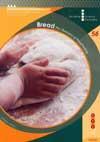
Following this intro we went about making bread using Building science concepts book 56: Bread: The chemistry of bread making as a guide for my lesson planning. Refer to my gbsparker class blog post on our bread making discovery.  

I wanted the children to explore raising agents in several ways and understand that the raising occurs by a chemical reaction between the ingredients in which carbon dioxide is developed. We used baking soda, and yeast to prove this theory in several different ways throughout each morning. More so, I needed them to understand the nature of yeast being a living organism. I found a great narrative in Yet more everyday science mysteries. Stories for inquiry-based science teaching*, which supported children in exploring this concept and determine that yeast reacts differently from baking soda; requiring time and warmth to create the chemical reaction required to develop the carbon dioxide.

As a teacher the process of planning and teaching this unit reinforced the 'teacher as learner' immensely for me. Even though I thought I knew a lot about bread making, I too learned so much during this process. I enjoyed teaching it and my learners enjoyed being a part of the discovery process. 


This blogpost relates to RTC: 
4.iii) initiate learning opportunities to advance personal professional knowledge and skills. 
6.ii) Through planning and teaching, demonstrate knowledge and understanding of relevant content, disciplines and curriculum documents. 
8.i) enable ākonga to make connections between their prior experiences and  learning and their current learning activities. 
9.ii) Select teaching approaches, resources, technologies and learning and assessment activities that are inclusive and effective for diverse ākonga. 


*Konicek-Moran, R. (2011) Yet more everyday science mysteries. Stories for inquiry-based science teaching. NSTApress p. 93-97

Knowledge and transfer

Yesterday I was delighted to see that my students had grasped, retained and applied something they had learned a few weeks ago. Particularly because at the time I wasn't sure that they had really understood. 

The concept was figurative language, similes and metaphors. We had been reading a narrative and were discussing the similes and narratives within. The students had been asked to create their own metaphors afterwards with limited success. 

Yesterday I was reading a picture book after lunch and I came across a wonderful metaphor where the soldier lived in a grimy prison. When posing the question to the class, one of my boys who had struggled with concept earlier, confidently identified it as a metaphor. What followed was an awesome class discussion about figurative language, led by the learners. 

What a great way to end the week.